Perfect Skin Isn't Real
- lucy caterer
- May 17
- 6 min read

Updated: May 19
Real skin is no longer enough, yet the version of skin we are taught to aspire to doesn’t actually exist.
Perfect skin has become one of beauty’s most persistent illusions. It’s an ideal that is constantly pushed in front of us. Across filtered selfies, edited campaigns, and flawless yet ‘natural’ makeup routines, it is presented as the goal.
Pores and blemishes are made to seem like flaws, something to be minimised or removed rather than recognised as natural, normal features of the skin. Texture has become stigmatised – redefined as a problem rather than a reality. What we have come to understand as ‘perfect skin’ is not a reflection of real skin, but a constructed ideal.
Perfect skin isn’t real. It is the result of constant marketing from skincare and beauty brands, combined with lighting, editing, filters, and increasingly uniform beauty trends. Rather than reflecting authenticity, it reinforces a manufactured beauty standard, reshaping how we see our own faces and turning normal skin into something to be corrected rather than valued.
When Did Texture Become a Problem?
Skin has texture. Blemishes are completely normal and part of how skin naturally looks. But at some point, they stopped being seen that way and started to feel like something that needs to be corrected. Skin is now being held to an airbrushed standard: smooth, even, poreless, and blurred.
This shift has changed the way we interpret our own reflection. It developed alongside social media, as platforms like Instagram and TikTok prioritised highly visual content, and as cameras and editing tools became more advanced. It’s now easier than ever to smooth and blur skin into something unrealistic. What once looked obviously edited has gradually started to pass as natural, making the line between what’s real and what’s altered much harder to recognise. With AI now part of that process, that line is becoming even more difficult to define.
As filters and retouching became more subtle, they also became more influential. Skin without texture didn’t just look desirable, it started to feel expected. The more we saw it, the more normal it seemed, and the less space there was for real skin to exist without being compared to something more polished.
At the same time, the beauty industry began to mirror this shift. Skincare and makeup moved further towards refinement - minimising pores, smoothing texture, creating a flawless finish. Products stopped being just about enhancing skin and became more about correcting it. Texture wasn’t something to work with anymore, but something to reduce, control, or erase altogether. As trained beauty therapist Abigail Frances explains, “Healthy skin is not naturally poreless or perfectly smooth. Texture, blemishes, and changes in the skin are completely normal, but social media and beauty marketing have distorted what people now expect real skin to look like.”

But in reality, skin hasn’t changed - only the way we see it has. The expectation of flawlessness is built on images that are often edited, filtered, or artificially enhanced, yet still presented as natural. In chasing an airbrushed ideal, even common experiences like acne can start to feel like failures rather than realities. Texture hasn’t become more visible - just less accepted.
Filters and expectations
As this expectation has intensified, so has the pressure around acne in particular. Unlike general texture, acne is often framed less as something natural and more as something to fix, something temporary, rather than something that can simply exist.
Filters and editing tools have played a key role in shaping this perception. On platforms like TikTok and Instagram, skin can be instantly smoothed, brightened, and perfected, often without it being immediately obvious. These subtle adjustments don’t just enhance appearance - they quietly redefine what is seen as normal. For example, built-in camera enhancements on platforms such as Instagram automatically soften texture and brighten under-eye areas, meaning “unedited” images are often already subtly altered before being shared.
Product ranges increasingly centre on finishes described as “airbrushed” or “filter-like”, particularly in complexion categories, reinforcing the expectation of a visibly perfected base.
In everyday conversation online, phrases like “skin care journey” or “clearing my skin” frame acne as something in progress, rather than something normalised. As a result, acne is increasingly positioned as something to eliminate rather than live with. This is reinforced through both product language and everyday comments, where clear skin is treated as the end goal and breakouts are described as something to “fix” or “get rid of,” rather than a natural variation in skin.
At the same time, there are signs of resistance. On TikTok, creator Tyla Beau Smith described acne as “cool and beautiful,” captioning the post “self-love is the best kind of love.” Alongside this, unfiltered posts showing texture and breakouts have become more visible. Yet the fact that these moments are often framed as refreshing or empowering suggests they are still seen as exceptions, rather than the norm.
This framing is not limited to everyday language. Public figures have also spoken about the emotional impact of visible skin. Actress Lili Reinhart has discussed experiencing acne in the public eye, describing it as isolating and something that made her feel as though she needed to hide. Similarly, Pamela Anderson has frequently appeared without makeup in public, challenging conventional ideas of beauty and encouraging greater acceptance of natural skin.
When Real Skin Is Unfamiliar
As highly curated images of skin dominate online spaces, real skin increasingly appears unfamiliar in contrast. In environments such as Instagram and TikTok, faces are often presented in a consistent visual language: smooth base makeup, even tone, softened texture, and controlled lighting. Over time, this repetition creates a narrow visual reference for what skin is expected to look like.
This is reflected in how unedited skin is received. Images showing visible pores, acne, or uneven texture are frequently described in comments as “refreshing” or “relatable,” suggesting that they sit outside of what is normally seen. The language itself implies deviation - not because the skin is unusual, but because it is less commonly shown in its unfiltered form.
This shift is also visible in beauty marketing. Many products now centre on terms such as “blur,” “smooth,” and “perfect,” positioning texture as something to be minimised rather than acknowledged. Foundation and skin products are increasingly designed not just to even tone, but to erase visible detail altogether, reinforcing a flattened standard of skin.
This expectation is reinforced in everyday life. Front-facing camera filters, automatic retouching tools, and editing features are often used as default rather than choice, meaning that most visual self-representation is subtly altered before it is shared. As a result, unedited skin becomes less familiar - not because it has disappeared, but because it is less often seen in its natural state.
Even celebrities associated with “perfect” beauty standards have acknowledged how constructed these images are. Reflecting on her 2022 Met Gala look for Vogue, Kim Kardashian discussed the extreme preparation, styling, and visual presentation involved in achieving the final image, reinforcing how heavily beauty ideals rely on controlled lighting, makeup, and presentation rather than natural appearance alone.
Is Perfect Skin Real?
Perfect skin, as it is widely presented, is not a reflection of reality but a constructed standard shaped through repetition, digital alteration, and cultural expectation. Across social media, advertising, and everyday visual habits, skin is continuously refined into an ideal that removes the texture that defines real skin.
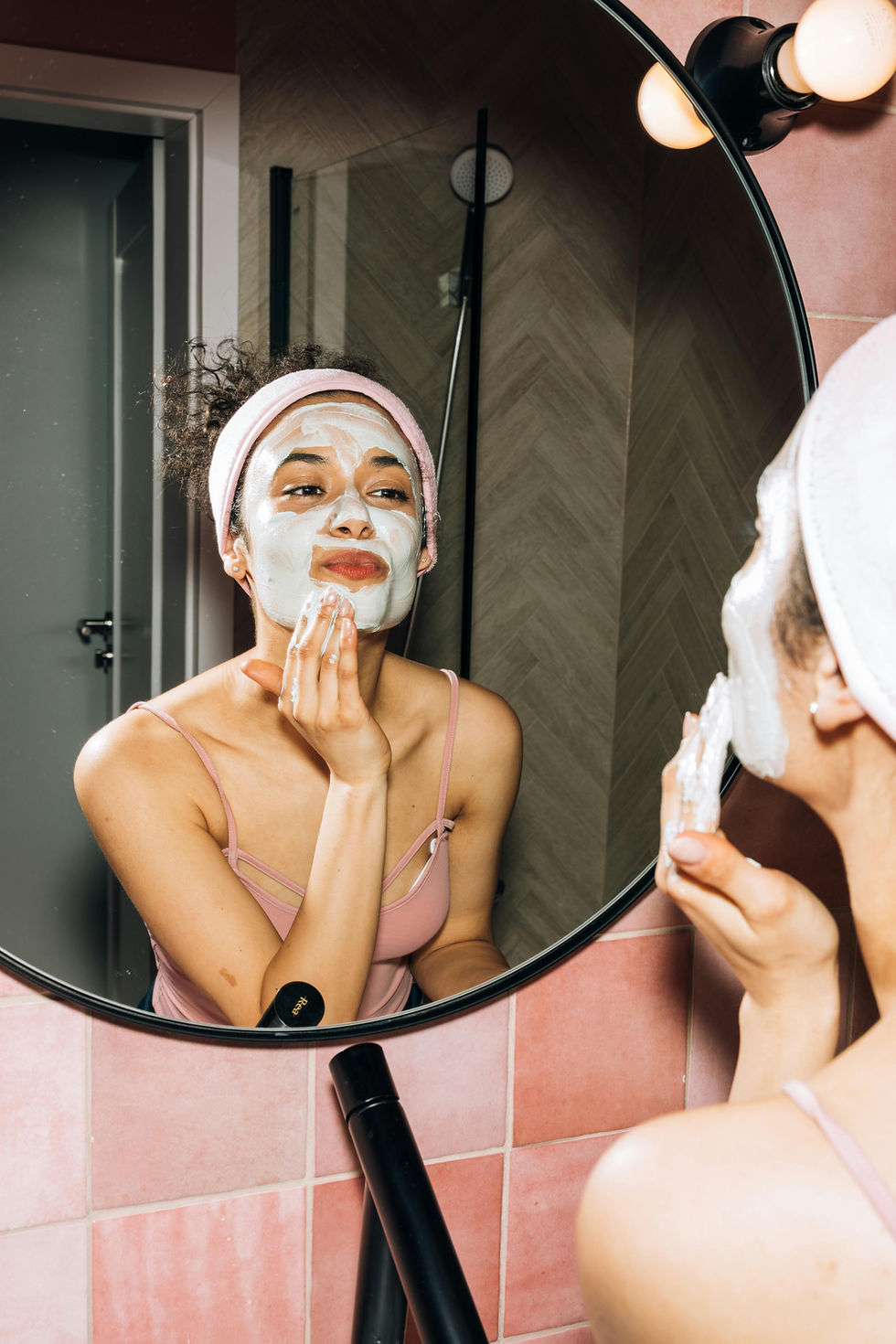
As these standards become normalised, what is natural becomes less visually familiar. Features such as pores, blemishes, and acne are not new, yet their visibility is increasingly treated as something to correct. Even moments of unfiltered skin online are often labelled as “refreshing” or “relatable”, reinforcing how rarely they are seen in
contrast to edited norms.
This is reinforced in the language of beauty marketing itself. Terms such as “blur,” “smooth,” and “filter-like finish” now dominate product descriptions, shaping the expectation that skin should be perfected rather than simply cared for. At the same time, unfiltered content continues to circulate on platforms like TikTok, where acne and texture are increasingly visible - but still often framed as a statement rather than a standard.
While conversations around skin acceptance and self-confidence continue to grow, they exist alongside a visual culture that still prioritises refinement over reality. This suggests that the issue is not awareness, but repetition: what is repeatedly seen becomes what is understood as normal.
Ultimately, perfect skin is not a goal to reach, but an idea that has been constructed and made desirable. Seeing it this way doesn’t just change how skin is viewed - it questions why that standard exists at all.
Comments